



Appointments are available either in person at our Toronto location or remotely through PHIPA-compliant video therapy.

Communication and Interpersonal Skills Treatment in Toronto
Doctoral-Level Psychological Care

Therapy that targets communication and interpersonal skills at Laksman Doell Psychology is delivered by doctoral-level registered psychologists, both in person at our office in the Annex neighbourhood of Toronto and virtually across Ontario.

What Difficulties with Communication Skills Look Like

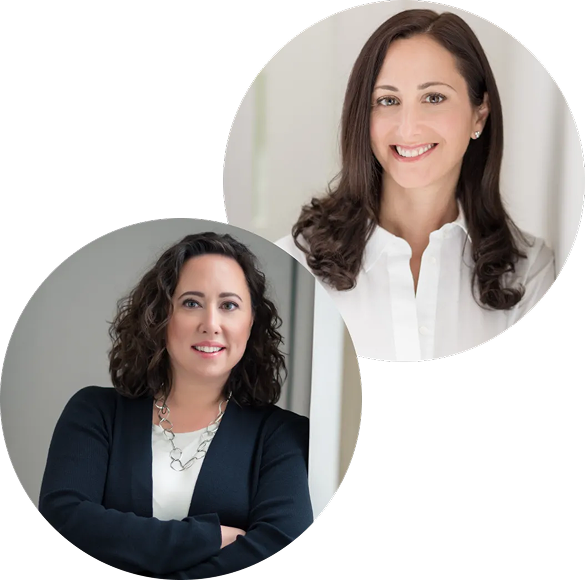
"Many of us were not taught effective communication strategies, and when we struggle to get important wishes and needs met, it can lead to conflicts, frustration, resentment, and feelings of ineffectiveness and loss of self- esteem”
Dr. Wendy Zhao, Laksman Doell Psychology

You and the person sitting across from you cannot stop having the same conversation, and the same conversation keeps not landing. Or, you lead a team well at work and watch the same skills go sideways at home, and you cannot figure out why. Or perhaps there is a conversation that you have been avoiding for months, and the longer that it sits, the heavier it gets, and the harder it is to have.

Honest and constructive communication is a key component of healthy interpersonal relationships, but that doesn’t mean that it is something that we are naturally good at. Communication is a skill, and like all skills, it needs to be learned.

That said, most of us are never actually taught how to communicate well. The communication patterns that we carry into our adult relationships were shaped by the relationships that raised us, the early experiences that taught us what was safe to say, the things that got us into trouble, and our observations of what made the room go quiet. Those patterns make sense given where they came from. However, they also often stop serving us, sometimes for years, long before we notice.

Communication skills involve much more than just talking. It’s about knowing what you want to say, being able to approach difficult conversations with confidence, and knowing how to say the things that feel hard in a manner that feels constructive. It’s also about being able to listen and to be receptive to messages from others, and about being able to negotiate sometimes complicated situations where different people may have different or competing needs, positions, opinions, and interpretations.

The specific difficulties with communication skills that people want to work on can vary widely, but common themes include all of the following. How to disagree without escalating. How to initiate conversations when you are already anticipating the ways that they will go wrong and how you will get shut down. How to listen without going into defense. How to repair after an argument has gotten away from you. How to say no without overexplaining. How to set a limit without losing the relationship. Each of these are skills. They are teachable, they can be practiced, and they tend to hold once they are learned well.

IF YOU ARE READING THIS

You may not be sure what you need, but something brought you here…

This is what has brought you here. And you are in the right place.
COMMUNICATION AND INTERPERSONAL SKILLS TREATMENT IN TORONTO

The difficulties with communication skills that we treat:

At Laksman Doell Psychology, we provide psychological treatment to adult individuals and couples who are looking to explore and understand the patterns of communication that they feel stuck in and that are no longer serving them well. We work with people who are looking to improve their communication and interpersonal skills at work, at home, or in their wider social circles, and those who are looking to improve their relationships with their colleagues, staff, friends, families, children and partners.

Our doctoral-level psychologists provide therapy that promotes further development of constructive communication and interpersonal skills centered around a number of different presenting problems, including:

Difficulties with Assertiveness

Being assertive means being able to clearly and directly communicate our personal needs and boundaries in a way that also acknowledges respect for the individuals that we are communicating with and the relationships that we value. Difficulties with assertiveness can arise when we have never had space to ask ourselves what we really need, when we are scared to raise our needs with others for fear of rejection, disappointment or defensiveness, or when we simply never learned the words that might be most helpful to use.

Criticism and Contempt

The ability to provide constructive feedback to others in our lives is a crucial communication skill. It helps us to let people know when they have hurt us, to promote growth in others, and it allows us to clarify expectations. However, when feedback looks like criticism or is expressed with contempt, it is no longer constructive. It becomes an attack on the core character or personality of the person that we are communicating with, and it is no longer heard as important information about a specific behaviour or injury. It is experienced as insulting and disrespectful, it pulls for defensiveness, and it is ultimately corrosive to our relationships.

Defensiveness

Defensive responding is characterized by making excuses, avoiding responsibility, or by engaging in counterattack. It often arises in response to feeling criticized or feeling helpless, and while it is intended to be protective, it ultimately serves to escalate conflict and to create disconnection. Defensiveness is a barrier to both problem-solving and to honest dialogue, and it can damage both our personal and professional relationships. Learning how to engage nondefensively with others, and how to communicate in a manner that pulls for less defensiveness from others, are important communication skills that we all benefit from.

Shutting Down

When we shut down or withdraw completely from communication, this is rarely a sign of a deliberate choice, and it is more likely to be an indication of a survival mechanism that was at some point adaptive. After all, it makes sense that we shut down when we feel emotionally overwhelmed or flooded and our nervous system is blocking access to our thoughts and our words, when we feel like there is just no point in communicating because we anticipate that we won’t be heard, or when we’re simply exhausted from having the same conversation over and over. Learning to counter this pattern requires both addressing the underlying emotional dysregulation, and building confidence that we can find the words to express ourselves constructively.

Difficulties with Repair

No matter how hard we try, sometimes we all say things that come out the wrong way, or that land in a way that we did not intend. Healthy relationships are not defined by the absence of conflict, but rather by the presence of repair after conflict. Our personal and professional relationships will occasionally face ruptures, but without active repair involving self-awareness and accountability, moving from blame to curiosity, and reestablishing emotional safety, these moments may solidify into unresolved harm that serves to erode the very foundation of our most important relationships.

Emotional Expression

The behavioural urges that come with our emotions, and that were meant to protect us from harm, often run contrary to constructive communication. When we are scared, we avoid. When we are angry, we attack. When we are sad, we withdraw. Rather than giving in to these natural reflexive responses, healthy communication involves learning to notice our emotional reactions, to read the important information that they are providing us with, and to express this effectively to both ourselves and to the other people in our lives.
OUR APPROACH

Treatment that starts with understanding you.

At Laksman Doell Psychology, our doctoral-level psychologists work with adult individuals and couples on the dynamics and patterns that involve their communication and interpersonal skills. The way that conflict escalates faster than you mean it to, the silences that grow into walls, the words that come out wrong, and the conversations that you keep avoiding because they always go badly. We use evidence-based approaches that are designed to help you to build the skills that will allow you to learn to communicate more intentionally and effectively within the relationships that matter most to you.
The work is individualized and collaborative. The first few sessions are about assessing and understanding both you and your experience of communication: the early lessons that you learned about what was safe to express and what wasn’t, the patterns that were modelled for you and the behaviours that helped you to cope, and the way that these early lessons are showing up now and are preventing you from communicating effectively in the present. We will help you to build the language to express what you actually mean, the skills to navigate the conversations that matter most, and the steadiness to stay in the room when staying is the harder choice.
Cognitive Behavioural Therapy (CBT) is often the foundation of this work, and helps to surface the assumptions and interpretations that quietly drive both how we read the other people in our lives and how we respond to them. Emotion-Focused Therapy (EFT) helps us to identify the emotions underneath the words, to understand our underlying needs, and to communicate these more completely. When the patterns trace back to longstanding relational dynamics, we bring in interpersonally oriented psychotherapies that work with attachment and the relational patterns that have lived under the surface for a long time.
Some clients come for individual work on patterns that show up across their relationships. Some come because they want to bring a specific dynamic into focus. Some come ahead of a conversation that they know that they need to have, but that they are feeling ill-equipped to face. The work meets you where you are.
OUR DIFFERENCE

Specialist training.
Private practice access.

Every clinician at Laksman Doell Psychology is a doctoral-level psychologist who is registered with, or working toward registration with, the College of Psychologists and Behaviour Analysts of Ontario (CPBAO). We work with adults and couples on the patterns that get in the way of saying what you actually mean, and being heard in the way that you need to be heard. Our team has trained at sites including, but not limited to, the Centre for Addiction and Mental Health (CAMH), Sunnybrook Health Science Centre, St. Joseph’s Healthcare Hamilton, Princess Margaret Cancer Centre, Toronto General, North York General, Cleveland Clinic Canada, and the University of Toronto.

Several team members bring particular depth in the territory of relational dynamics and the patterns in communication that show up across professional and personal contexts. Sessions are available in person at 27 Prince Arthur Avenue in the Annex neighbourhood of Toronto, or virtually across Ontario via PHIPA-compliant video. All services are available virtually to any Ontario resident. No referral required.
GET STARTED

Ready to take the next step?

Life can be complicated, finding support shouldn’t be. At Laksman Doell, we take that seriously.

Send us a message

Service Form

"*" indicates required fields

Your information is private and confidential.

Frequently Asked Questions

Can I come alone, or do I need to bring a partner?
You can absolutely come alone. Therapy that targets communication and interpersonal skills is available for individuals who are working on patterns in any relationship, whether that is with a partner, a parent, a sibling, a child, or a colleague. You don’t need to bring the other person in.
Not exactly. Communication therapy can be done as an individual working on how you show up in relationships, or as a couple working on your relationship dynamics. Couples therapy goes deeper into the cycle between two specific people. If you’re not sure which is right for you, our intake process can help to clarify what might be the best fit.
Coaching tends to focus on skill-building in professional contexts. Therapy that targets communication and interpersonal skills goes farther into the emotional and relational patterns that drive the behaviour in the first place. It is clinical work, not just skills training alone.
No. You can contact us directly. No referral from a physician or psychiatrist is required.
Private practice services are not covered by OHIP. Coverage may be available through extended health benefits, as many plans cover the services of a registered psychologist. We recommend confirming with your provider before commencing treatment.
Yes. All services are available virtually via PHIPA-compliant video for any Ontario resident.

Life is complicated. We give you clarity.

The first step is a brief consultation to help understand what you are looking for. Email us at [email protected] or complete our contact form online.