



Appointments are available either in person at our Toronto location or remotely through PHIPA-compliant video therapy.

Treatment for Changing Difficult Behaviours in Toronto
Doctoral-Level Psychological Care

Treatment for changing difficult behaviours at Laksman Doell Psychology is delivered by doctoral-level registered psychologists, both in person at our office in the Annex neighbourhood of Toronto and virtually across Ontario.

What Difficult to Change Behaviour Looks Like

“The things that we do that don’t serve us almost always made sense at some point. They started as solutions.”

You drink more than you mean to. You scroll until the night is gone. You avoid the thing that you most need to do, then punish yourself for avoiding it, then avoid it again. These types of insidious behaviours often start out as a solution to some other problem. The drinking helped you to sleep. The scrolling gave your brain a break that it could not get any other way. The avoidance kept you safe. However, the behaviour that once protected you can quietly start working against you, and by the time that you notice it as a problem, it has already taken root.

The behaviours that are often most difficult to change are the ones that we are legitimately confused by or that feel like they don’t make sense (even when they do). Sometimes we have already struggled to change these behaviours, sometimes for years, with little success. However, we also know that struggling alone can be one of the things that keeps us stuck. We don’t know what we don’t know, and sometimes difficult behaviours won’t change without the help of an outside perspective.

Difficult to change behaviours don’t change without understanding and without a solid plan. This is true whether the behaviour is procrastination, drinking more than you mean to, eating in ways that you don’t like, lashing out, shutting down, checking, avoiding, or any of the other patterns of behaviour that leave you feeling stuck and a little ashamed.

Change is not a willpower problem. Willpower is a finite resource and a poor strategy. Meaningful and sustainable change involves understanding what the behaviour is doing for you, building the conditions for something different to take its place, and giving yourself the structure to make the new pattern hold.

IF YOU ARE READING THIS

You may not be sure what you need, but something brought you here…

This is what has brought you here. And you are in the right place
TREATMENT FOR CHANGING DIFFICULT BEHAVIOURS IN TORONTO

The types of behaviours that we often treat:

At Laksman Doell Psychology, we provide psychological treatment to individuals who are looking to make meaningful and sustainable change in behaviours that they are struggling to change on their own. Our doctoral-level psychologists have extensive experience working with individuals across a broad range of behaviours that are often resistant to change, including:

Health Behaviours

Many of us engage in behaviours that we know aren’t healthy, but that still continue to exist for a variety of reasons. Sometimes these behaviours are learned habits, and sometimes they evolve out of a need for comfort, or as a result of limited resources. These can include behaviours related to not eating as well as we intend to, not exercising as much as we want to, or not getting as much sleep as we need. Other health behaviours that can be difficult to change may include adherence to treatment or to medical recommendations in the context of an illness or injury.

Substance Use Behaviours

Substance-use does not occur in a vacuum. Making real and sustained changes involves understanding why we started using in the first place, what it is that is driving this behaviour in the present, and the different factors that are making it hard to stop. Whether the substance we are talking about is nicotine, caffeine, alcohol, cannabis, or any other recreational or illicit substance, change often starts by exploring your use with a nonjudgemental other.

Behavioural Avoidance

We evolved with a drive that helps us to avoid things that are painful, unpleasant, and unsafe. However, sometimes this can also lead us to avoid the very things that we need to do. Having difficult conversations. Studying for an exam or preparing for a stressful meeting. Doing things that make us feel anxious. These are all things that we may naturally want to avoid, and yet the avoidance often winds up costing us much more in the long run.

Interpersonal Behaviours

Sometimes the behaviours that are hardest to change are the ones that exist within the systems of interpersonal relationships in our lives. If it was never ok to ask for what we needed, if we were punished for saying no, or if we were never heard unless we yelled louder than everyone else, then these patterns of behaviour often persist. It is hard to change them if we don’t understand where they originated.

Compulsive Behaviours

If the behavioural patterns that you are living with have the specific shape of obsessions and compulsions, of mental rituals, of checking, washing, or seeking reassurance, then the work is different and the right treatment matters enormously. It is important to work with a clinician who really understands compulsive behaviours and the evidence-based treatments that work to change them.
OUR APPROACH

Treatment that starts with understanding you.

Our work is not about willpower. It is about understanding the why underneath the behaviour and about using evidence-based approaches to make meaningful change that actually holds. We collaborate with you to identify the patterns, to build new skills, and to create the conditions for the behaviour to change. Not just for a week. For the long term.
All of our psychologists are committed to working collaboratively with the individuals who come to us in order to develop a comprehensive formulation of the problematic behaviours that they are looking to change and the circumstances in which these behaviours developed and exist. We then use evidence-based strategies that have been shown to be effective in helping individuals to change even the most difficult to change behaviours. Motivational Interviewing (MI) is used to explore and resolve ambivalence about change, including allowing space for understanding the wisdom behind even our most problematic behaviours. Cognitive Behavioural Therapy (CBT) helps us to map the relationships between the triggers that we encounter and our thoughts, feelings and behaviours, and it gives us concrete places to intervene. Acceptance and Commitment Therapy (ACT) helps us to act on our values even when the difficult behavioural urge is loud and hard to ignore.
We also pay close attention to what tends to derail change. The middle of the week. The first slip. The moments when stress, poor sleep, or a hard day pulls you back towards the old pattern. These are not failures. They are often the most important data that the work generates, and we use them to refine the plan, not to confirm what the inner critic has been telling you. Change that holds is built on the slips, not despite them. We help individuals to develop comprehensive behaviour change plans that are grounded in evidence and that are built to allow for ongoing evolution and adaptation in the real world.
When the difficult to change behaviour is OCD-related, and has the specific shape of obsessions and compulsions, our practice has clinicians who have trained in Exposure with Response Prevention (ERP) and Inference-based Cognitive Behavioural Therapy (I-CBT), the gold-standard approaches for OCD. Many people with OCD have spent years in generalist therapy without ever receiving these treatments.
OUR DIFFERENCE

Specialist training.
Private practice access.
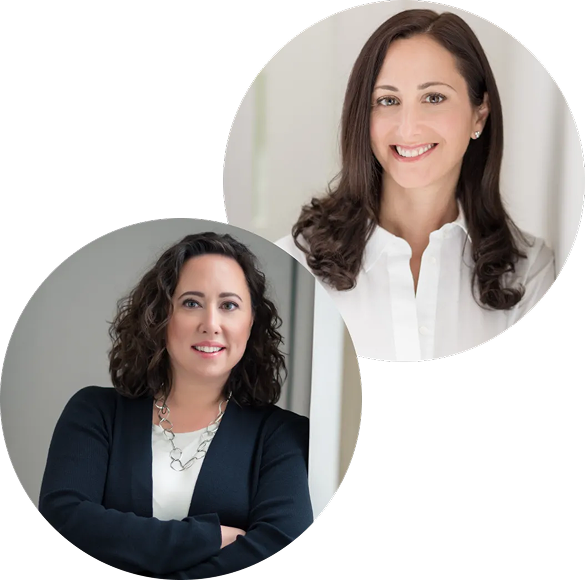
If you have been promising yourself that this time things will be different, and you are tired of being the only one in the conversation, then we are here. Every clinician at Laksman Doell Psychology is a doctoral-level psychologist who is registered with, or working toward registration with, the College of Psychologists and Behaviour Analysts of Ontario (CPBAO). Our team has trained in Motivational Interviewing, CBT and ACT, and has extensive experience in identifying the patterns that show up in adults whose behaviour has started to cost them more than it is giving back. We also bring particular expertise in the intersection of behaviour change and high-pressure professional life, where the patterns often hide inside otherwise high-functioning presentations.
Sessions are available in person at 27 Prince Arthur Avenue in the Annex neighbourhood of Toronto, or virtually across Ontario via PHIPA-compliant video. All services are available virtually to any Ontario resident. No referral required.
GET STARTED

Ready to take the next step?

Life can be complicated, finding support shouldn’t be. At Laksman Doell, we take that seriously.

Send us a message

Service Form

"*" indicates required fields

Your information is private and confidential.

Frequently Asked Questions

What kinds of behaviours does this work address?
Patterns like problematic drinking, behavioural avoidance, compulsive scrolling, emotional eating, people-pleasing, procrastination, shutting down, or lashing out. If the behaviour is costing you something real and you can’t make it stop on your own, then this work is relevant. If the pattern has the specific shape of OCD (obsessions, compulsions, or mental checking) then we have clinicians trained in ERP and I-CBT, which is the right treatment for that.
This work is appropriate for problematic patterns that haven’t reached the threshold of formal addiction. If you are managing physical dependence or need medically-supervised withdrawal, we can help you to find the right level of care and work alongside it where appropriate.
This varies. Many clients see meaningful change within twelve to twenty sessions. Some patterns have longer roots and may benefit from more extended work. You will have a clearer picture after the first few sessions.
No. You can contact us directly. No referral from a physician or psychiatrist is required.
Private practice services are not covered by OHIP. Coverage may be available through extended health benefits, as many plans cover the services of a registered psychologist. We recommend confirming with your provider before commencing treatment.
Yes. All services are available virtually via PHIPA-compliant video for any Ontario resident.

Life is complicated. We give you clarity.

The first step is a brief consultation to help understand what you are looking for. Email us at [email protected] or complete our contact form online.