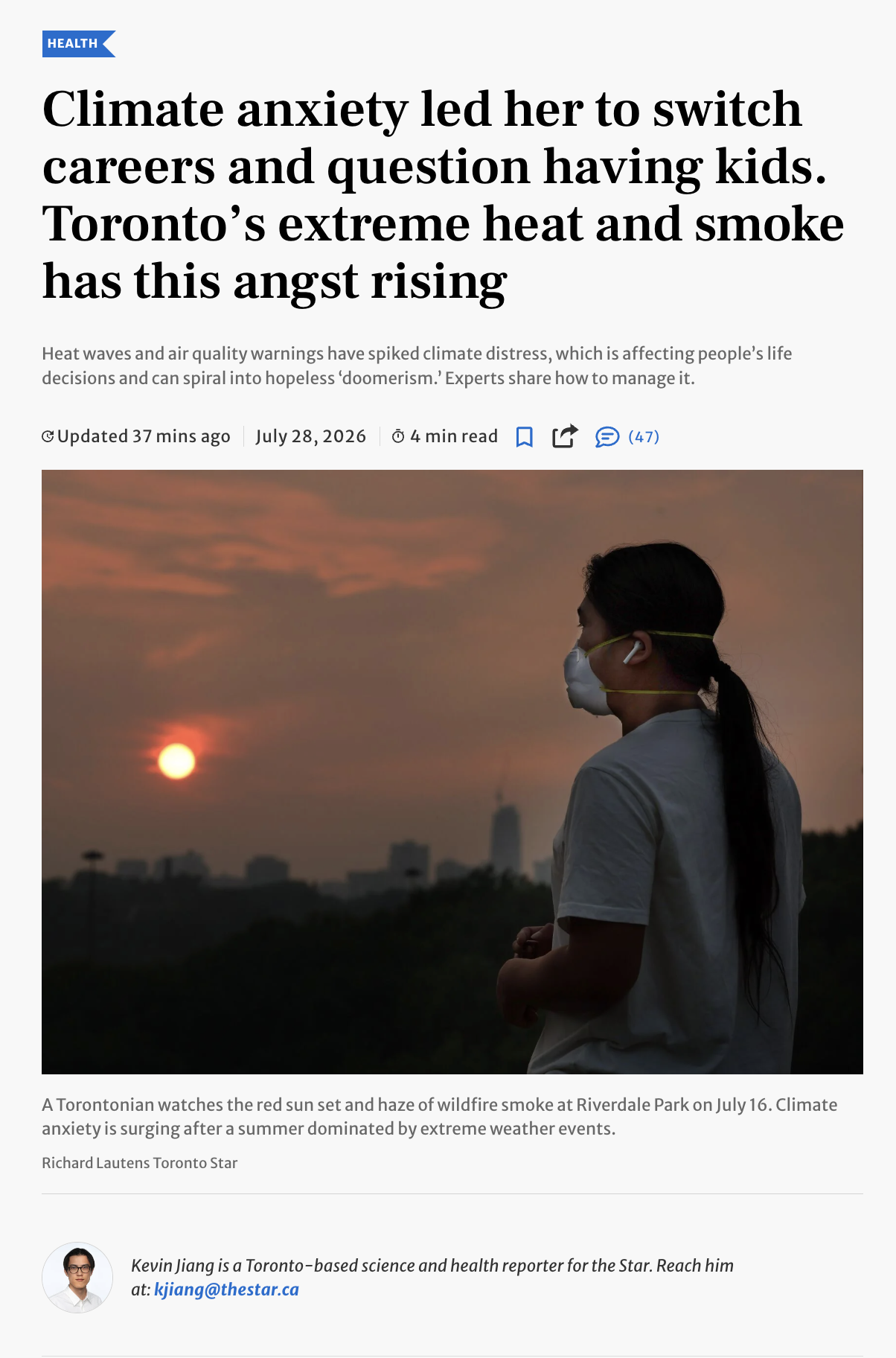



If you’re feeling a range of intense emotions in response to recent extreme climate-related events, please know – you are not alone.
Many of us are feeling the heaviness of climate change and as weather events get more extreme – so too do our reactions and feelings.
So, how can we cope with the real and valid feelings we are experiencing in response to our changing climate and extreme climate-related events?
1. ‘Name it to tame it’. We can regulate (or “tame”) or emotions by putting words to what we are experiencing internally. Here are some commonly used terms being used to discuss climate related stress:
- Climate, or eco, distress is an umbrella terms that involves a range of emotions (e.g., worry, grief, sadness, hopelessness) that we experience in response to ongoing climate-related events.
- Climate, or eco, anxiety involves anticipatory fear and worry about changes and the potential harm that can arise from climate change.
- Climate, or eco, grief involves a range of emotional responses (e.g., denial, anger, sadness, depression) to experiences of loss brought on by climate-related events.
2. Talk about your feelings. This might sound cliché and you may even be skeptical about what good just talking about your feelings will do, but it is often the case that talking about our emotions helps us reduce tension and uncomfortable feelings. Talking through our feelings also helps us to get clarity on what we need and what action (if any) we want to take. Another added benefit is that talking to supportive others allows us to feel more connected and less alone as we navigate these difficult experiences.
3. Take action. While we may not be able to control how intensely we feel at times, we can decide where to direct this emotional energy. One avenue is to ‘take action’ so we can have some sense of agency and control. For some, taking action might involve helping those individuals, communities, animals, or eco-systems, affected by climate-related events. Others may find empowerment from personal changes at home or in their immediate surrounding. While others can participate in climate movements, community groups, or get involved in civic actions, such as voting, or advocating, for systemic changes.
4. Take breaks. Some days it can feel like we are bombarded with climate concerns. If it’s not directly outside our window, it’s images and news about extreme weather events and devastation. If you’re feeling overwhelmed by the barrage of input, take a break from your device and make a meaningful effort to spend some time in the present moment. Better yet, make plans to do something you enjoy or to spend time with loved ones.
5. Finally, if you find yourself struggling to get through the day because of feelings of distress, anxiety, or grief brought on by climate-related events, seek professional help. A psychologist can help you develop skills to cope with these ongoing challenges.